

ERP systems became the foundation of modern manufacturing for a reason.
ERP systems became the foundation of modern manufacturing for a reason.
They brought:
And for years, that was enough.
But today, many operations still struggle with:
Even with ERP fully implemented.
So the question is no longer:
“Do we have systems?”
The real question is:
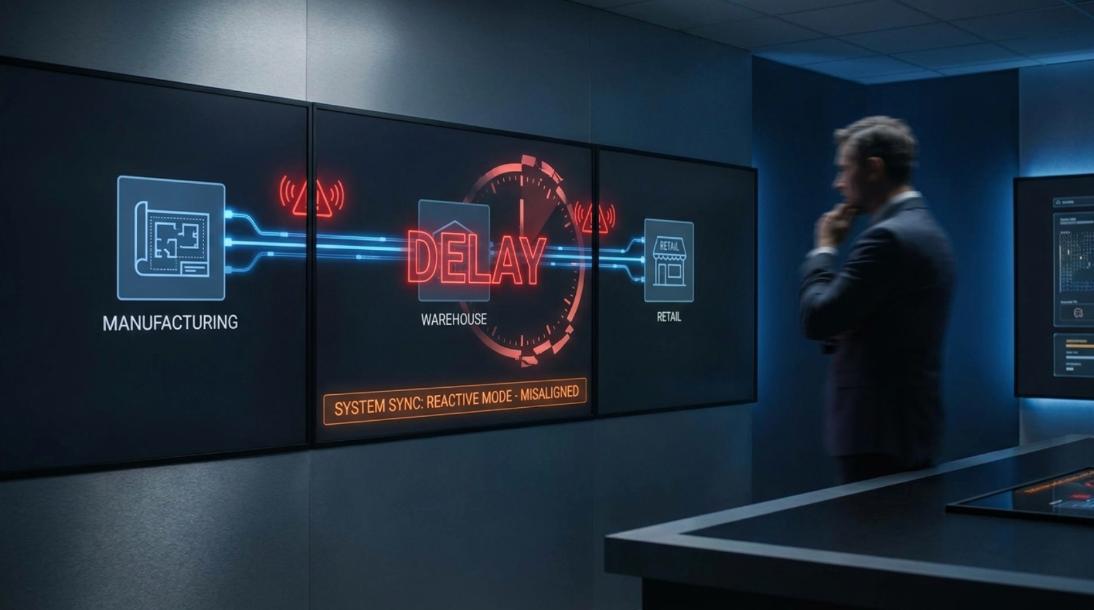
Why are operations still reacting too late?
What ERP Does Well
ERP systems are designed to:
These functions are critical.
Without ERP, modern manufacturing operations would struggle to maintain consistency and operational visibility.
ERP creates structure.
And structure matters.
Where ERP Falls Short
But ERP was never designed to orchestrate real-time operational decisions.
It does not:
ERP records what happened.
But operations still need to decide:
what happens next.
And that gap is where delays begin.

The Operational Reality
In real manufacturing environments:
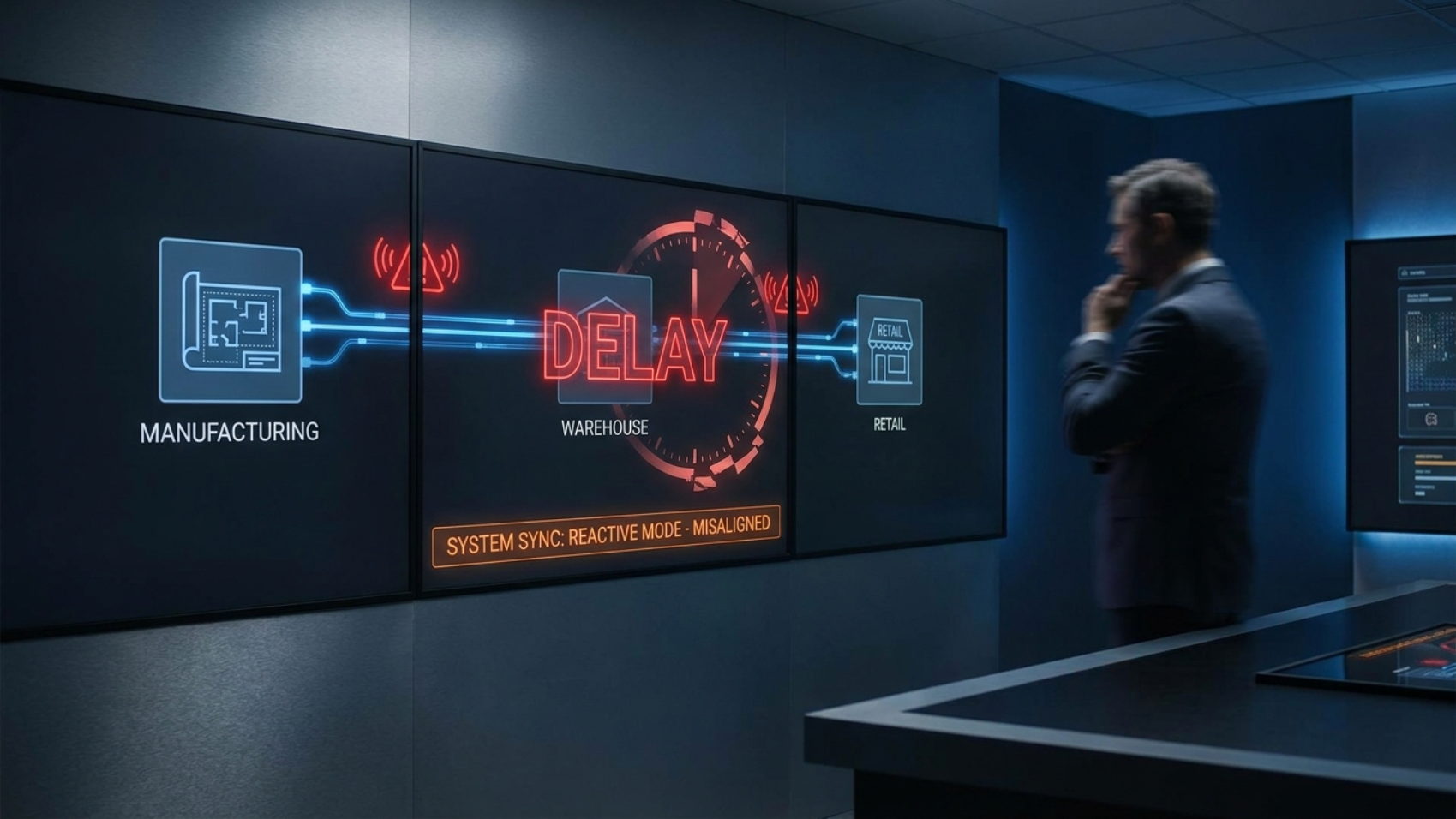
Planning systems, production systems, warehouse systems, and retail systems often operate at different timing.
As a result:
Everything is technically connected.
But synchronization is missing.
And when timing breaks down:
performance quietly deteriorates.
The Missing Layer
What most operations are missing is not another dashboard.
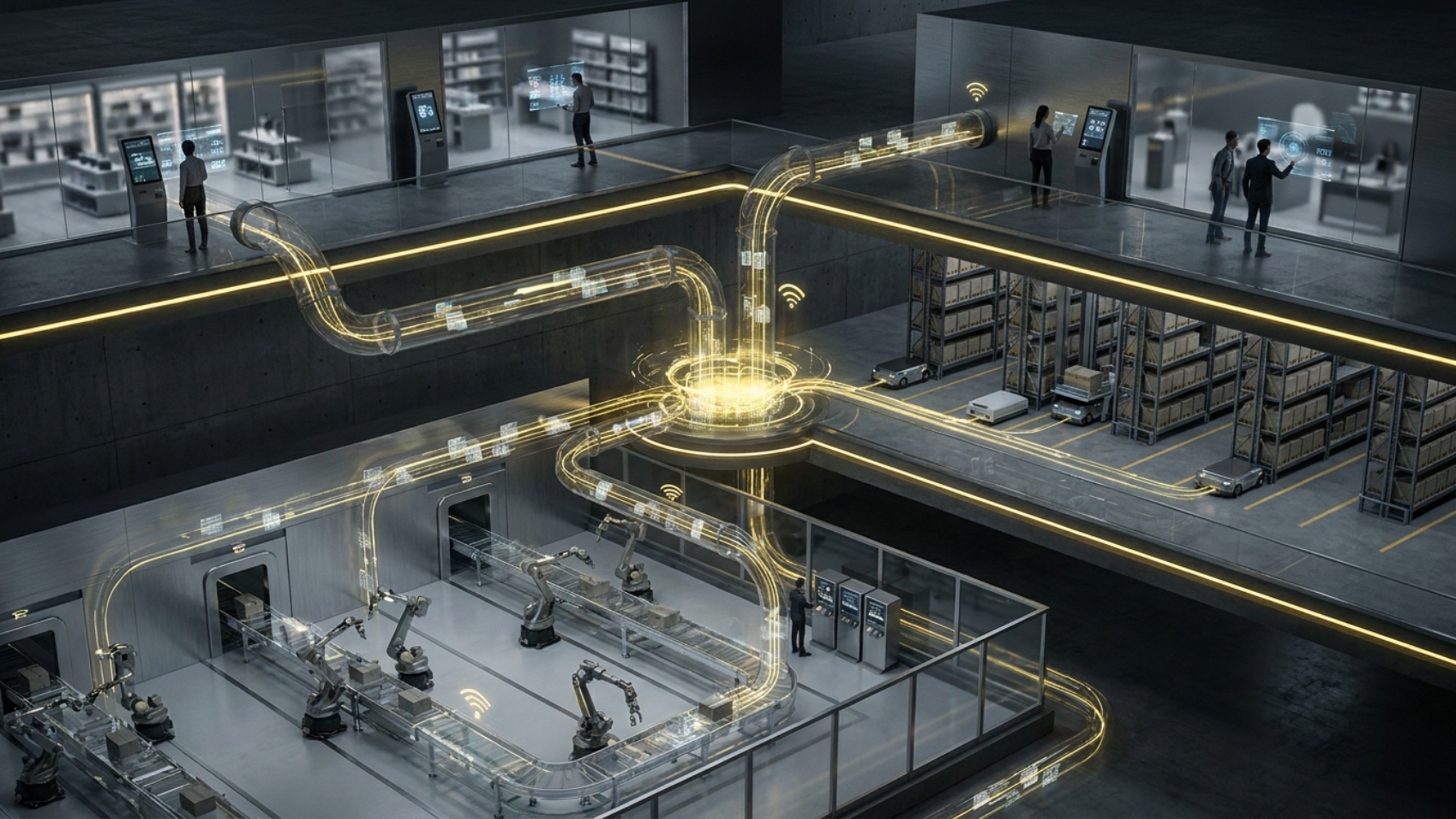
It is a real-time decision layer.
A layer that can:
This is where modern operational intelligence is moving.
Not toward more visibility.
But toward faster operational synchronization.
Conclusion
ERP is necessary.
But it is no longer enough.
Modern manufacturing performance is no longer limited by data availability.
It is limited by:
The companies moving ahead are not simply digitizing operations.
They are synchronizing them.
CTA
If your ERP still depends on:
Then the real issue is not visibility.
It’s synchronization.
→ It may be time to rethink how operational decisions are made.