

Retail margin erosion rarely happens in obvious ways.
It doesn’t come from a single failure.
It comes from small inefficiencies that accumulate across the system.
Forecasting misses demand signals.
Inventory data drifts from reality.
Fulfillment slows under pressure.
Each issue seems manageable in isolation.
But together, they create a structural problem.
One that cannot be solved at the operational level alone.
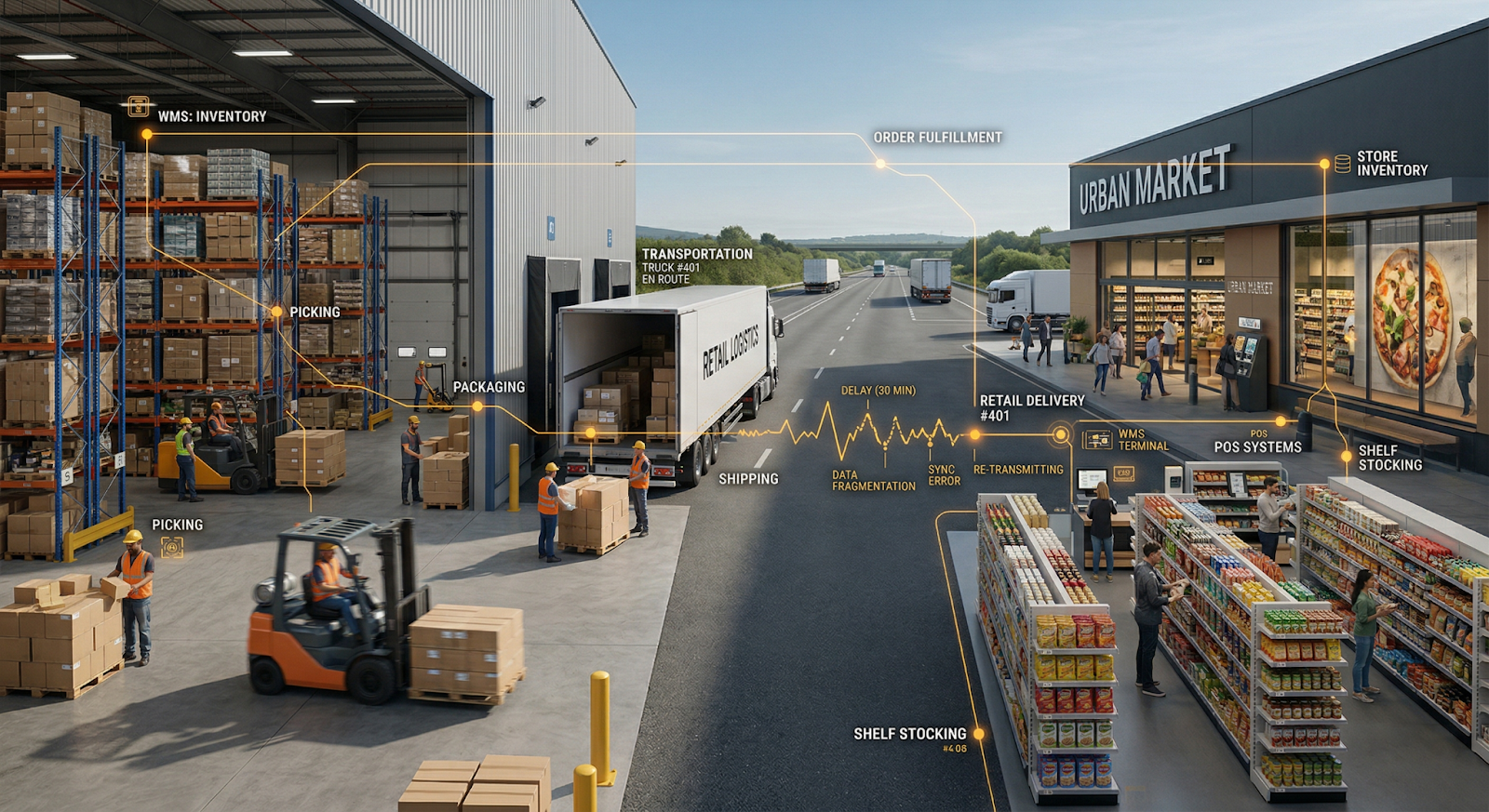
Retail organizations are highly optimized for execution.
But margin loss rarely appears as a single operational failure.
Instead, it manifests as:
Each of these outcomes originates from misalignment across systems.
Not from lack of effort.
Not from lack of tools.
But from lack of coordination.
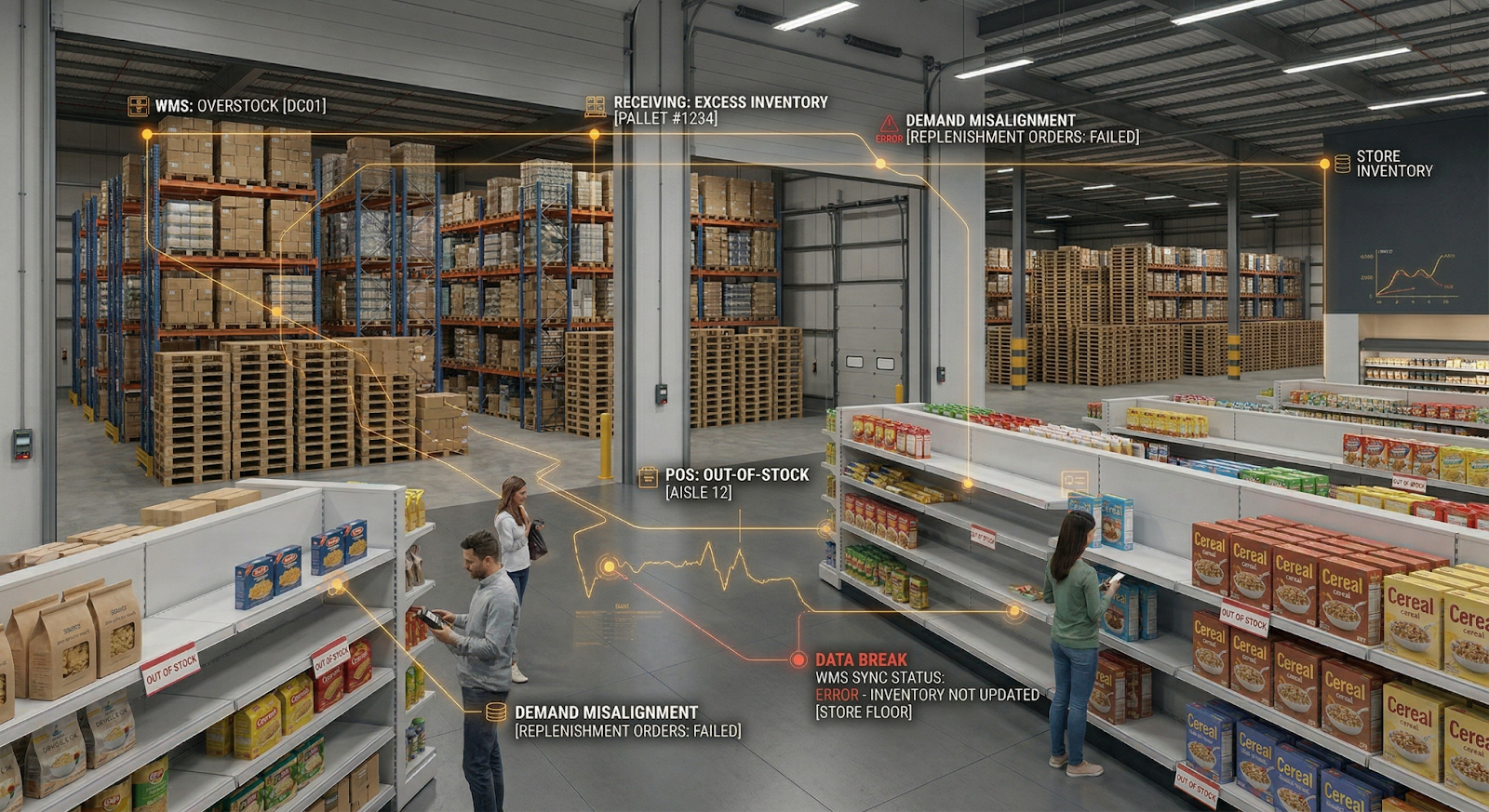
Forecasting systems attempt to predict demand.
But without synchronized data across operations, forecasting becomes isolated.
Sales signals may not reflect real-time inventory levels.
Promotional campaigns may not align with supply constraints.
The result:
Demand is predicted.
But not coordinated.
Forecasting accuracy becomes less relevant
when execution cannot follow.
Inventory is often treated as a warehouse issue.
In reality, it is a system-wide challenge.
Procurement, warehousing, and sales channels must operate in sync.
When they do not:
Inventory accuracy is not just about counting.
It is about coordination across systems.
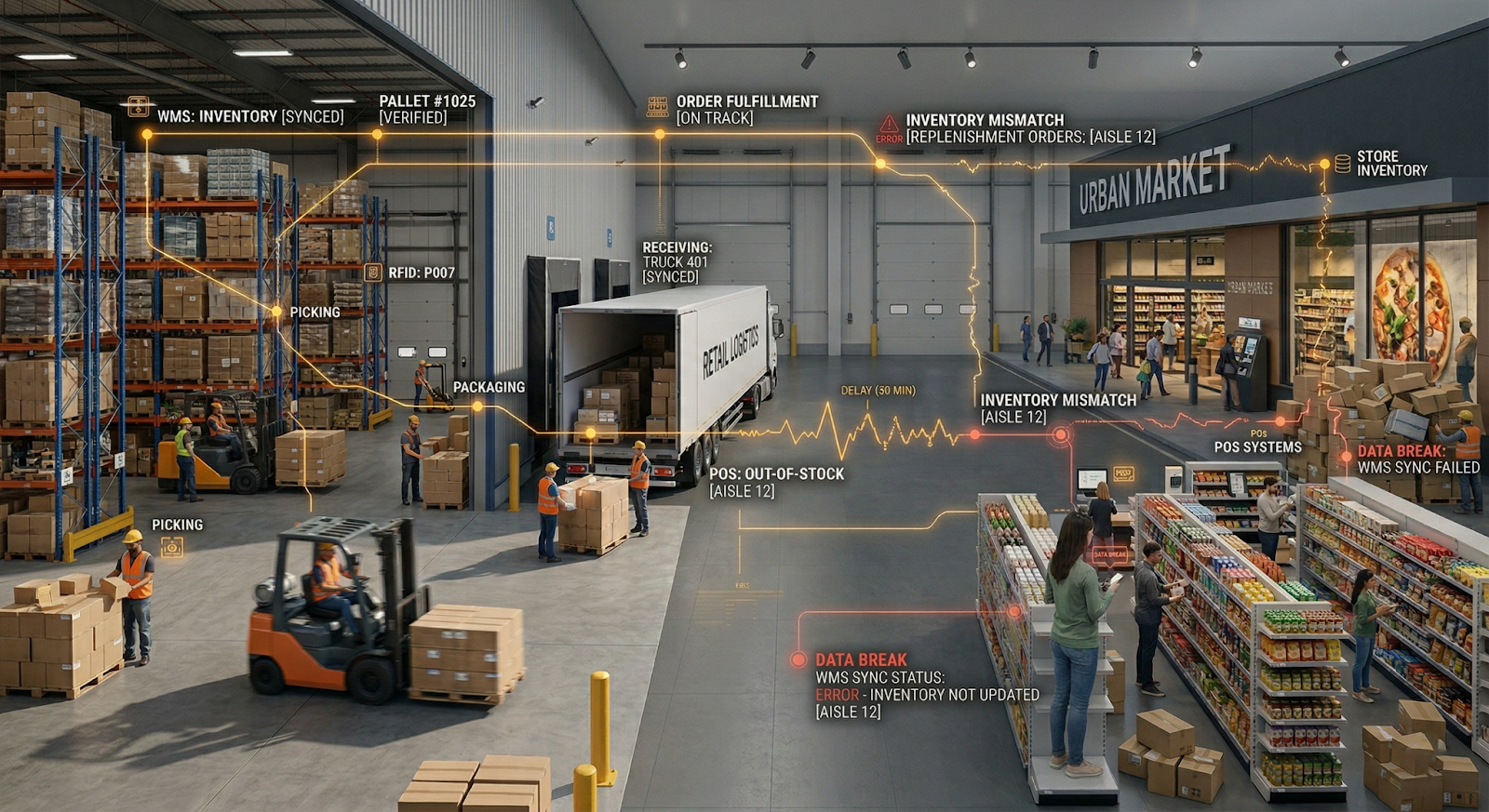
Modern retail operates across multiple fulfillment channels:
Each channel depends on synchronized data.
When systems are fragmented:
Speed is not limited by logistics capacity.
It is limited by coordination latency.
Retail operations generate vast amounts of data.
But data alone does not create value.
What matters is how quickly and effectively decisions are made across systems.
Real-time decision intelligence enables:
Without this layer, data remains reactive.
With it, systems become coordinated.
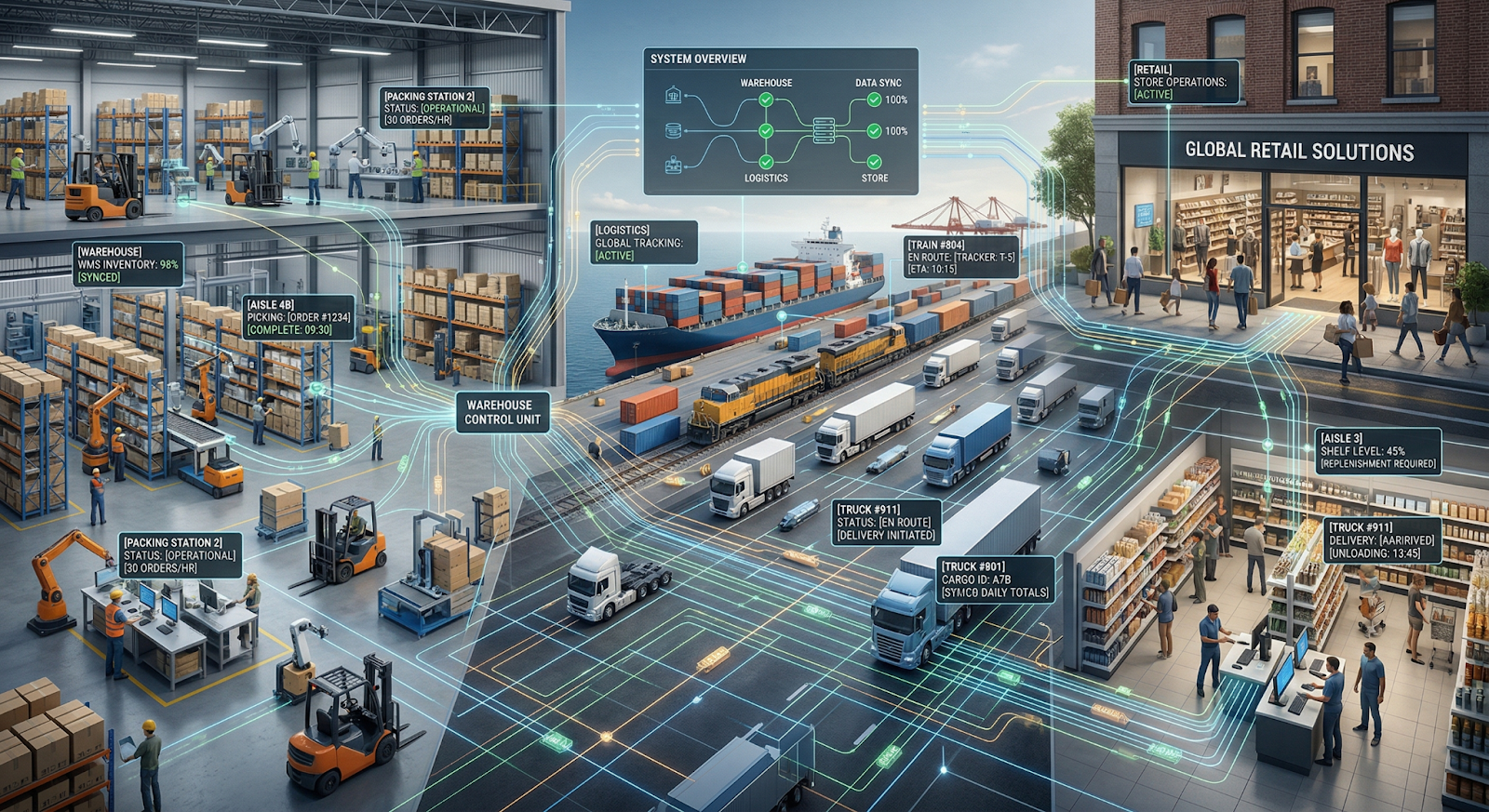
Retail performance is often framed as an operational challenge.
But the root cause is structural.
Fragmented systems create:
Modular supply chain architecture changes this dynamic.
It enables systems to:
Margin is no longer protected by isolated optimizations.
It is protected by coordinated systems.
Retail margin is not just a financial metric.
It is a reflection of how well systems work together.
As complexity increases, operational fixes become insufficient.
What is required is a structural shift.
From fragmented systems
to coordinated intelligence.
Explore Retail Intelligence
Calculate Your Margin Exposure