


For more than a decade, visibility has been the dominant promise in supply chain technology.
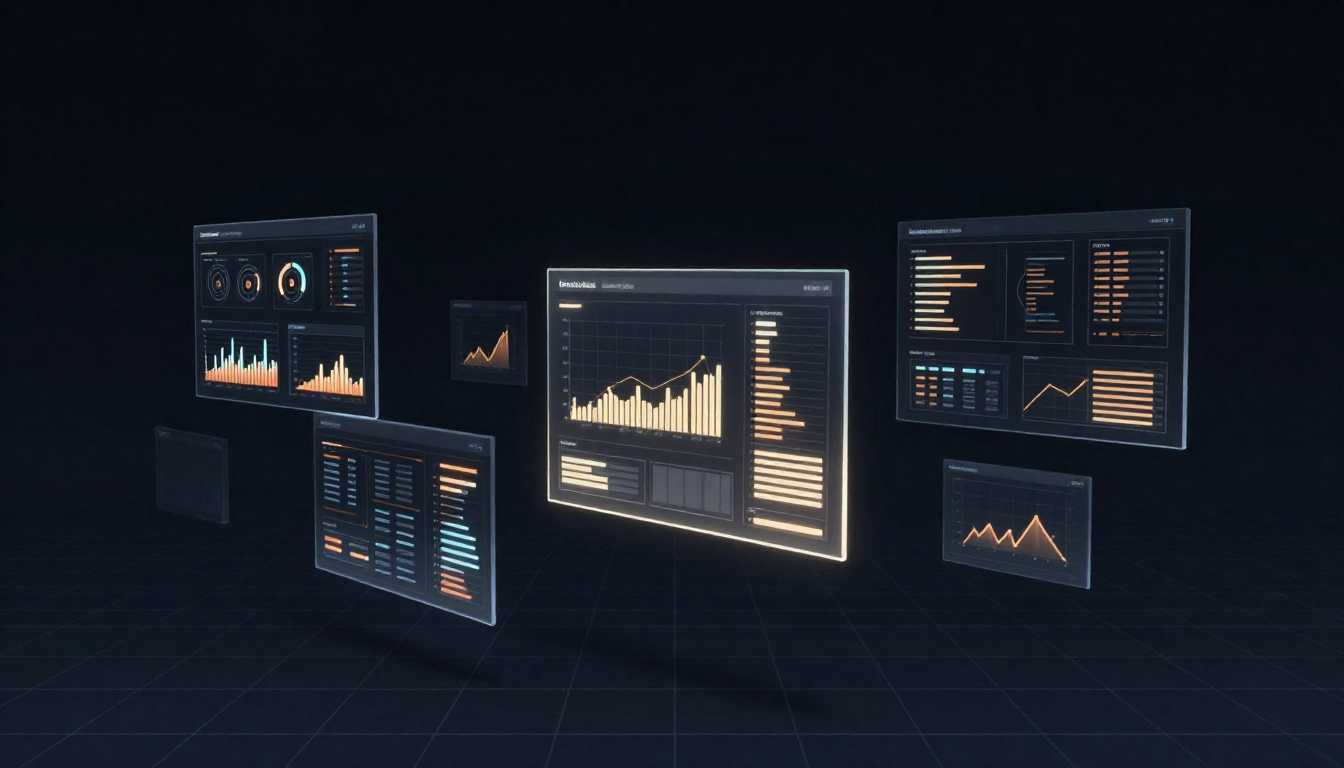
Dashboards.
Control towers.
Real-time tracking.
Data aggregation.
Enterprises invested heavily in visibility platforms believing that if they could see everything, they could control everything.
But visibility is not the same as intelligence.
And intelligence is not the same as coordination.
We are entering a structural shift in supply chain architecture — one that moves beyond monolithic control systems toward modular intelligence infrastructure.
Visibility became the default because it was measurable.
Executives could see:
The dashboard became the symbol of digital maturity.
But dashboards are retrospective by design.
They describe what happened.
They rarely determine what should happen next across interconnected functions.
A supply chain does not fail because information is missing.
It fails because decision-making is fragmented.
Procurement sees one reality.
Planning sees another.
Logistics operates in its own system.
Finance reconciles later.
Visibility does not guarantee alignment.
It only guarantees observation.
The illusion lies in assuming that observation equals coordination.
Enterprise Resource Planning (ERP) systems were designed for control and consolidation.
They were built around:
This architecture made sense in relatively stable operating environments.
But modern supply chains are no longer stable.
They are:
Monolithic systems struggle under this complexity because they are rigid by design.
Adaptation becomes expensive.
Integration becomes layered.
Customization becomes brittle.
As complexity scales, friction multiplies.
The system may still function — but coordination slows.
And in competitive markets, decision latency is cost.
Monolithic architecture assumes predictability.
Modern supply chains operate in volatility.
This is not a feature gap.
It is a structural limitation.
Modular architecture shifts the foundation.
Instead of centralizing everything into a single rigid system, it allows intelligence to be:
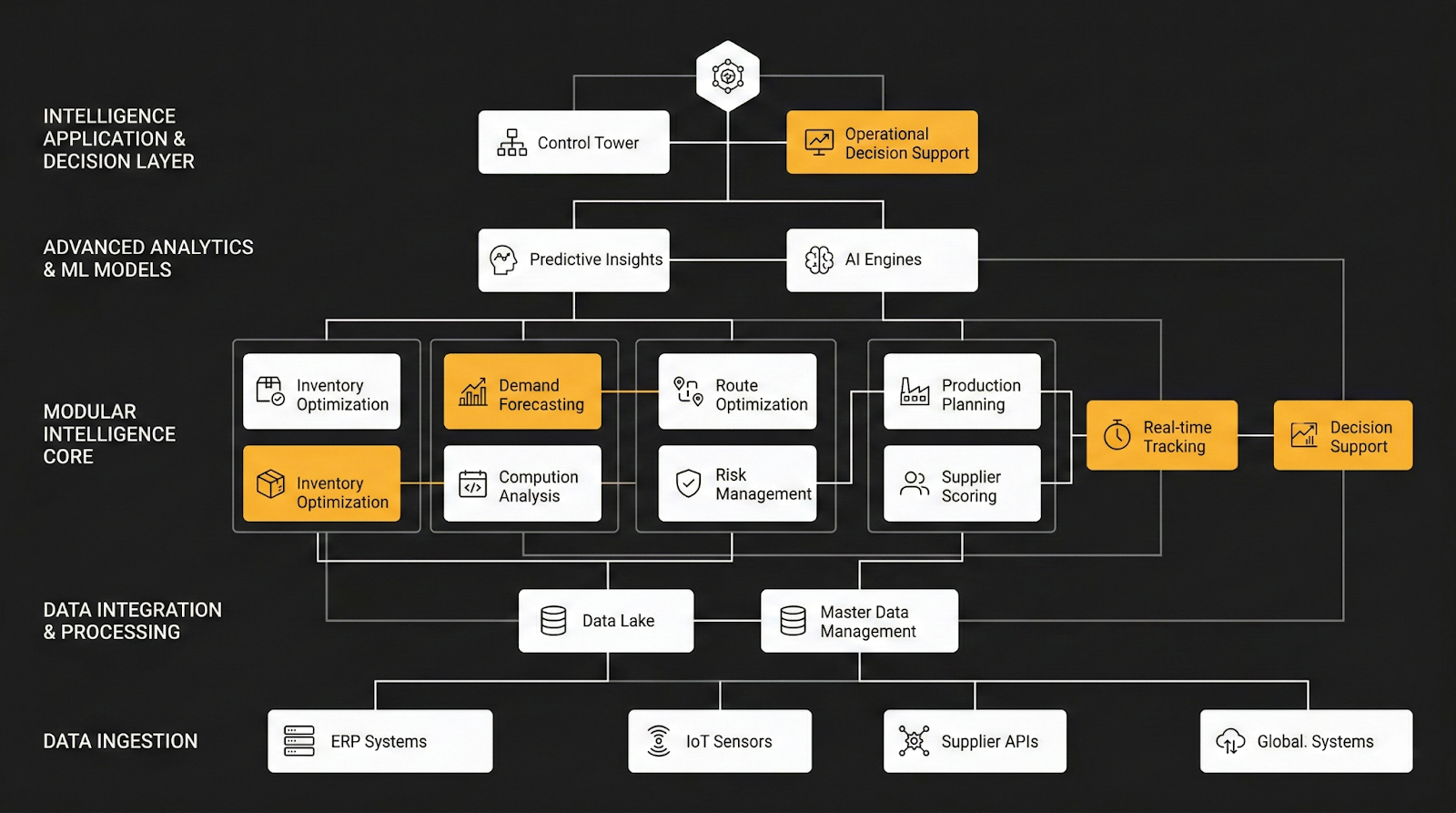
In modular supply chain intelligence:
Each function operates as a node within a coordinated architecture.
Modules communicate through defined interfaces.
Data flows without locking decision logic into one core system.
The intelligence layer sits above operational modules — orchestrating coordination rather than replacing every tool.
This enables:
Modular does not mean fragmented.
It means structured flexibility.
It transforms supply chain technology from control software into decision infrastructure.
This structural shift is not theoretical.
It affects every complex industry.
Production
Co
Procurement misalignment.
Inventory distortion.
Modular intelligence enables cross-functional synchronization without replacing entire
Retail margins are architectural outcomes.
Forecasting accuracy.
Stock positioning.
When sys
Modular coordination reduces decision latency between demand signals and operational response.
Logistics inefficiency often hides in reconciliation delays and siloed tracking
Idle capacit
It emerges from fragmented coordination.
A modular intelligence layer allows asset-level, route-level, and financial-level systems to synchronize without structural overload.
Distributed assets require distributed coordination.
Mini-grids.
Storage units.
Regional distribution.
Energy infrastructure demands adaptive intelligence, not rigid control frameworks.
Modular architecture enables scaling without structural collapse.
This shift is not about technical elegance.
It is about economics.
Decision latency has cost.
Every delayed alignment between planning and execution creates:
Margin leakage rarely appears dramatic.
It accumulates quietly across fragmented systems.
Coordination failure compounds quarterly.
Enterprises that adopt modular intelligence reduce:
Architecture determines economic outcome.
Visibility was a milestone.
Modular intelligence is the next structural phase.
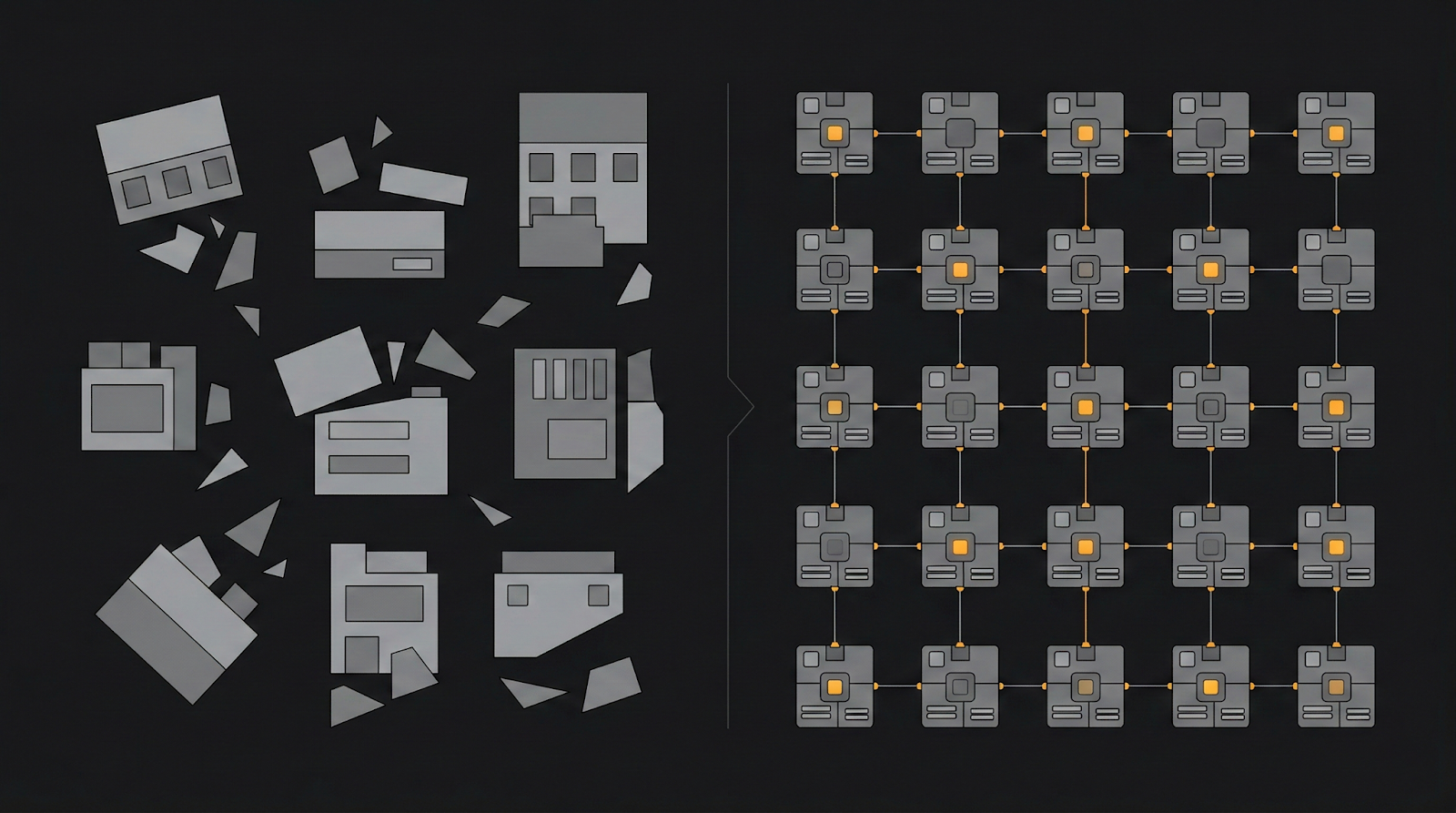
The evolution from visibility to modular intelligence represents a fundamental architectural shift.
It is not about adding more dashboards.
It is about redefining how systems coordinate at scale.
COTIT is built around this principle.
Modular supply chain intelligence is not an upgrade feature.
It is the foundation.
Architecture determines intelligence.
And intelligence determines competitiveness.