

Manufacturing has never had more data.
From Data to Decisions: The Missing Layer in Operations
Manufacturing has never had more data.
Every operation today generates signals continuously:
Dashboards are everywhere.
Reports update in real time.
Systems are more connected than ever before.
And yet, many operations still struggle with the same problems:
Which raises an uncomfortable question:
If companies already have so much data—
why do operations still react too slowly?

The problem is not the lack of information.
The problem is what happens after information appears.
Because data does not automatically become action.
Most companies invest heavily in:
The assumption is simple:
“If we can see more, we can operate better.”
But visibility alone does not create operational speed.
In many organizations, the data arrives instantly—
while decisions still take hours.
Teams still wait for confirmation.
Coordination still depends on meetings.
Execution still slows down between departments.
And during that delay, operations continue moving.
This is where many companies quietly lose operational performance.
Not because systems failed.
But because decisions could not move as fast as the operation itself.

What most organizations are missing is not another dashboard.
It is a decision layer.
A structured operational flow that determines:
Because operations do not improve simply by collecting more information.
They improve when organizations reduce the delay between:
awareness
and response.
Without that layer, complexity grows faster than coordination.
Systems become fragmented.
Teams react independently.
Departments optimize locally while operations slow down globally.
And eventually, organizations become data-rich but decision-poor.
This is one of the biggest operational shifts happening today.
The competitive advantage is no longer access to information.
Almost every company already has access to data.
The real advantage is:
how quickly operations can convert information into coordinated action.
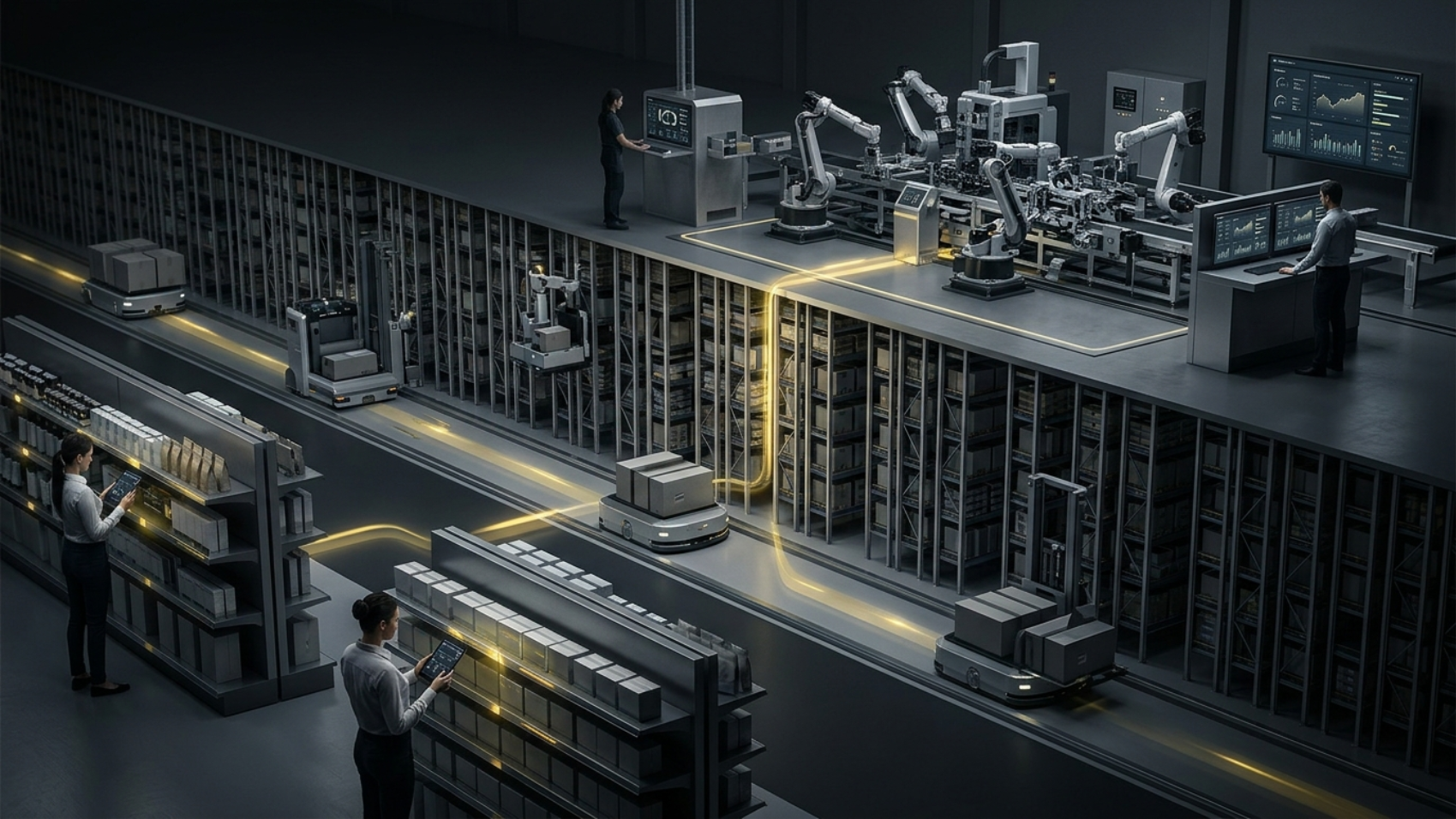
This is why modern operations are beginning to shift from:
data-driven
to
decision-driven.
Because dashboards alone do not reduce operational delays.
Reports alone do not synchronize teams.
Visibility alone does not improve execution timing.
Operations improve when organizations can:
That is the missing layer many companies still struggle to build.
And it is increasingly becoming the difference between reactive operations and responsive operations.
The next operational advantage will not come from collecting more data.
It will come from reducing the delay between:
signal
decision
and execution.
Because in modern operations, speed is no longer just operational efficiency.
It is competitive advantage.
If your operations are rich in data but still slow to respond—the issue may not be visibility. It may be the way decisions move through your organization. → It may be time to redesign how operational decisions actually happen.