

As the global economy moves into 2026, speed has become the defining factor of business survival, shifting the focus from how much data companies collect to how quickly that data drives action. Traditional ERP systems, built for stability rather than agility, now act as anchors—creating silos, slowing decisions, and imposing an invisible tax of inefficiency. In contrast, a Business OS functions as an adaptive central nervous system, unifying tools, data, and teams into a single intelligent control layer. Through modular design, real-time visual intelligence, and built-in readiness for AI and emerging regulations like Digital Product Passports, a Business OS enables companies to anticipate change, automate intelligently, and scale without disruption. Solutions like CONTROL 360 provide the clarity and control organizations need to move from operational chaos to decisive, future-proof execution.

As we enter 2026, the global economic landscape has shifted fundamentally. Speed is no longer just a competitive advantage; it is the primary requirement for survival. In this era, the crucial question for business leaders is no longer "How much data do we have?" but rather "How fast can that data drive a decision?" This shift marks the end of the era of rigid, traditional ERP (Enterprise Resource Planning) dominance and the dawn of the Business OS.
For decades, ERPs were considered the backbone of operations. However, these legacy systems were designed for stability in a slow-moving world. In the economic reality of 2026, that rigidity has become an "anchor" hindering corporate agility.
The primary issues that frequently arise include:
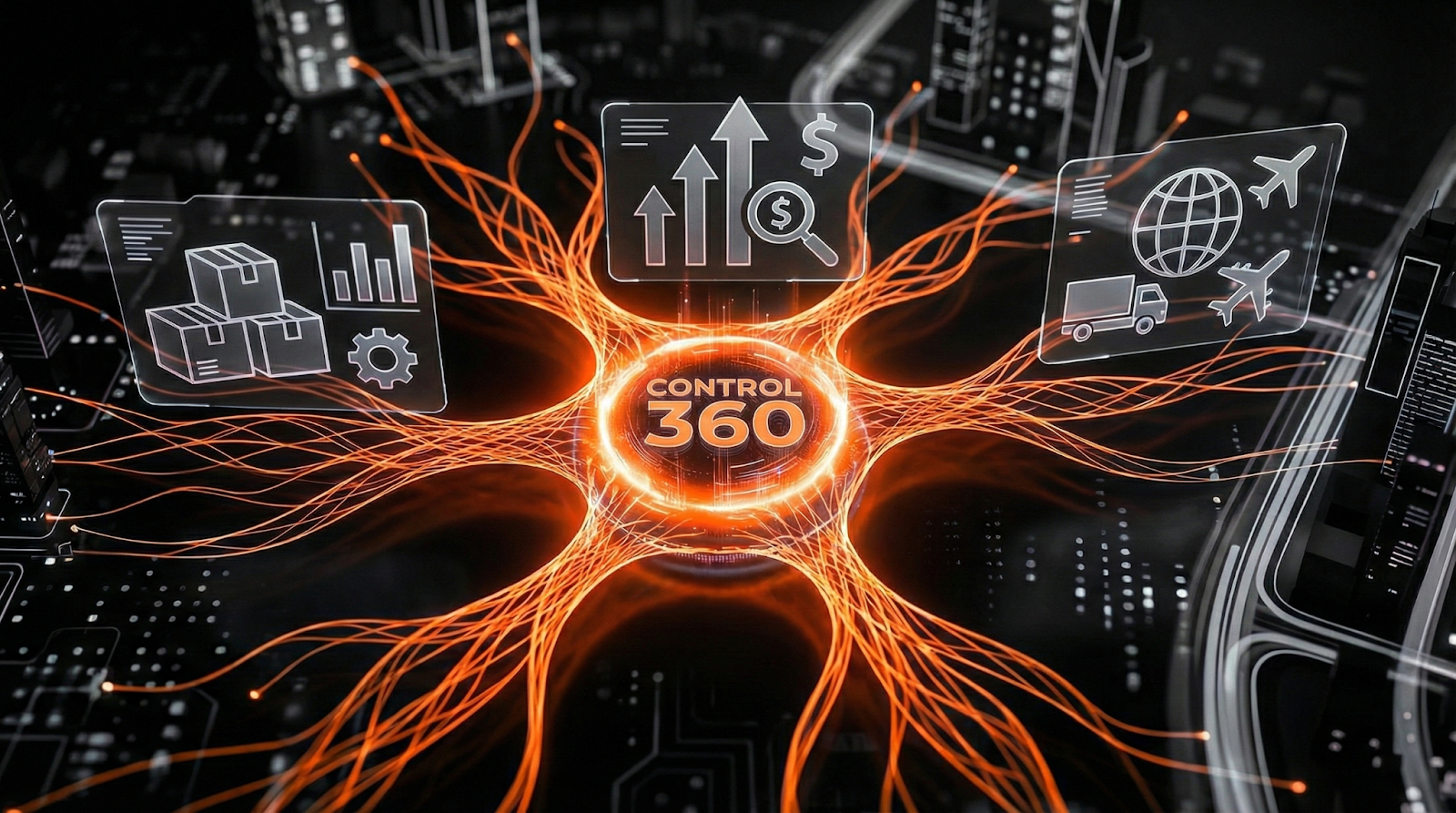
Unlike ERPs, which often feel like closed "black boxes," a Business OS is positioned as a living, adaptive central nervous system. A Business OS is not just a management tool; it is an intelligent control layer—like CONTROL 360—that unifies your tools, data, and teams into a single integrated ecosystem.
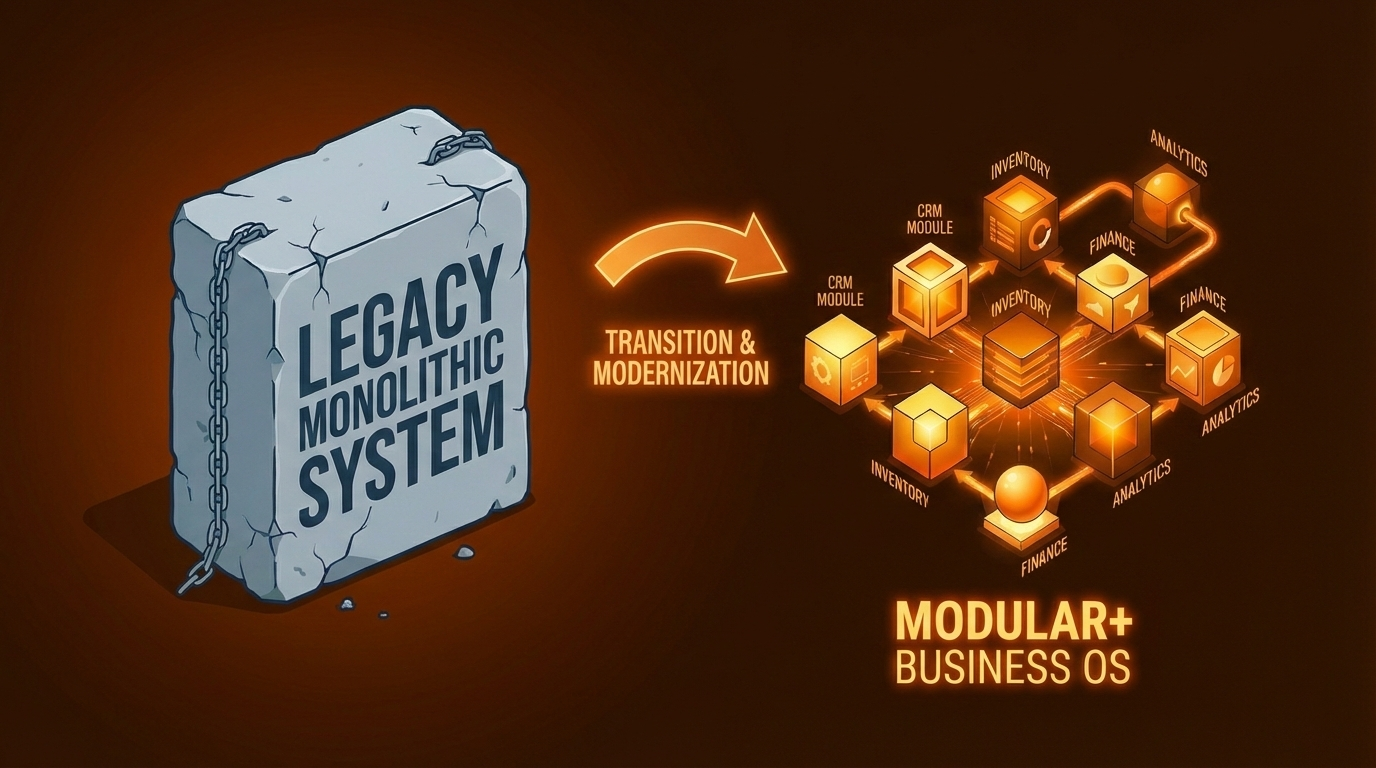
A core pillar of the Business OS strategy is modular design. Legacy technology forces you to adopt "all-in-one" packages that are often difficult to change. In contrast, through the Modular+ approach, companies can start tactically with a single process or department and scale gradually without overhauling their entire infrastructure. It is about connecting what you already trust, not forcing a replacement.
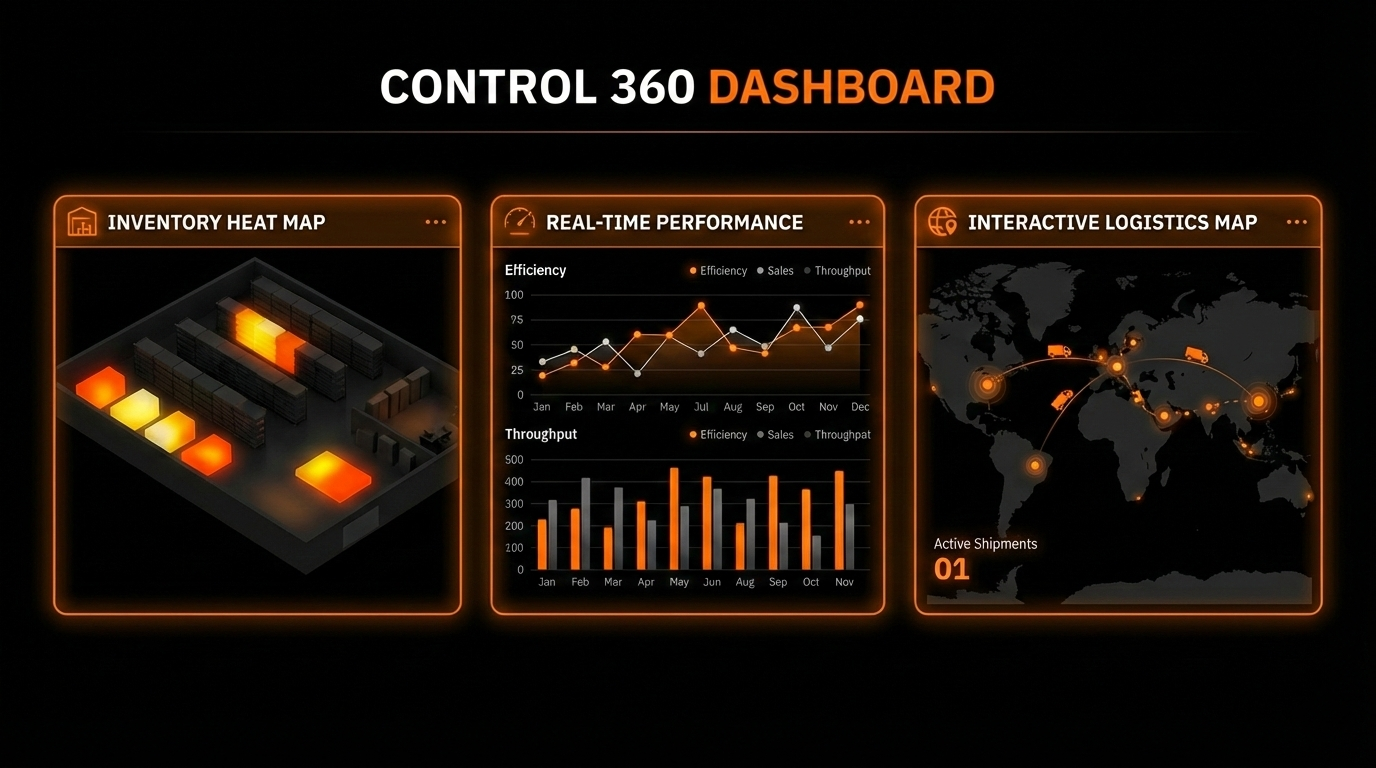
Visual clarity is no longer a luxury; it is a strategic weapon. A Business OS transforms data complexity into actionable instructions. With a system capable of real-time synchronization between sales, warehouse, and logistics, companies no longer just react to problems—they anticipate them before they occur.
The Business OS of 2026 is also designed to be ready for new regulations, such as Digital Product Passports (DPP), which demand total transparency across the supply chain. With a structured data foundation, Artificial Intelligence (AI) integration becomes seamless, allowing for intelligent workflow automation in minutes, not months.
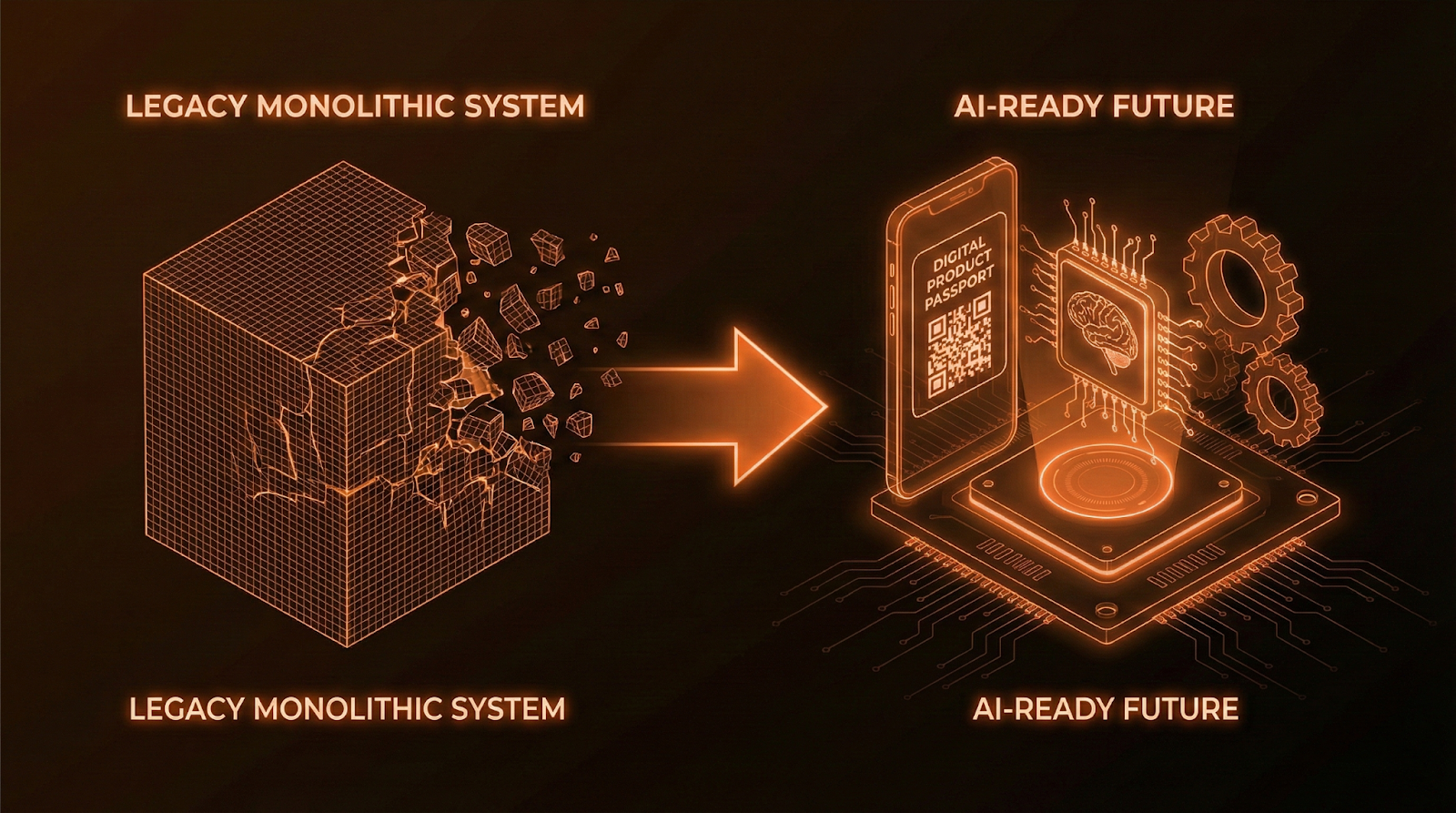
The future does not wait for those stuck in rigid, outdated systems. True digital transformation begins by seeing everything clearly—moving from chaos to clarity. A Business OS provides the foundation for companies to evolve intelligently, remain competitive, and maintain full control over their future.
Ready to transform? Don't let legacy systems limit your growth potential. Learn how to build an intelligent control layer for your business today with CONTROL 360.